Core Thought: A Display Font That Elevates Small Business Branding
A Fresh Look for Our Café’s Menu
Recently, I helped a local café redesign their menu as part of a broader brand refresh. They wanted to feel more upscale without losing the warmth that keeps customers coming back. We tested several display fonts, but Core Thought stood out immediately. It has a timeless elegance that felt both inviting and refined. The café owner was thrilled with how quickly the menu looked more professional, simply by switching to this font.
What Makes Core Thought Unique
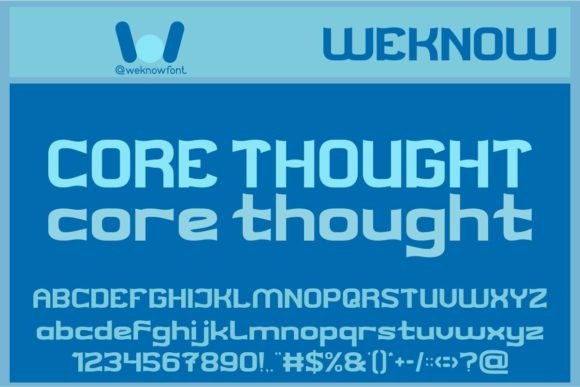
Core Thought is a display font that blends charm with clarity. It falls somewhere between a modern serif and a stylized sans serif, giving it a distinctive personality that’s not too loud but still memorable. It’s not a script font or a handwritten style, but it carries a subtle human touch that makes it feel approachable. This is the kind of premium font that works well in both print and digital environments, especially when you want your brand to look polished and intentional.
What sets it apart is its balance. It’s decorative enough to catch the eye, yet clean enough to maintain readability even at smaller sizes. That’s rare in a display font, which often sacrifices legibility for flair. Whether it’s used on a product label, a logo, or a social media graphic, Core Thought brings a level of sophistication that helps small businesses stand out without feeling overdesigned.
Real-World Uses: From Packaging to Web Design
I’ve tested Core Thought across a range of branding materials, and it consistently delivers. A candle maker I worked with recently used it on new jar labels, and the result was stunning. The font’s structured curves gave the packaging a boutique-level finish, which helped elevate the brand from “local artisan” to “curated lifestyle product.”
We also used it for a boutique’s hang tags and found that it paired beautifully with a minimalist sans serif for body text. This kind of font pairing is essential for creating visual hierarchy and guiding the customer’s eye. Whether it’s for product labels, thank-you cards, or digital banners, Core Thought works best when used for headlines, titles, and short phrases where impact matters most.
- Logo design – adds a refined focal point
- Product packaging – brings clarity and elegance
- Business cards – enhances memorability
- Social media graphics – improves visual consistency
- Shop banners – creates a cohesive brand look
Typography Matters for Brand Perception
Many small business owners underestimate how much typography affects customer trust. A poorly chosen font can make even the best product feel amateur. Core Thought helps avoid that by offering a clean, professional typeface that communicates quality and consistency. It’s not just about aesthetics—it’s about building a brand that feels reliable and intentional.
For example, a skincare brand I consulted for used Core Thought on their product labels and online shop banners. The result was a more unified brand identity that customers began to recognize instantly. The font’s elegant structure reinforced the brand’s message of purity and care, which translated into more customer engagement and a stronger visual presence across platforms.
Readability and Practical Design Tips
One thing to keep in mind when using Core Thought is its ideal use case. It shines brightest in display text—logos, headlines, packaging titles, and promotional graphics. It’s not meant for long paragraphs or body copy. For printed packaging or small labels, always test the font at actual size to ensure legibility. On mobile screens or social media thumbnails, it reads well when used for short, impactful text.
When pairing it with other fonts, go for contrast. A simple sans serif like Helvetica or a clean serif like Georgia makes for a balanced combination. Avoid pairing it with another decorative font, which can create visual clutter. Think of Core Thought as the star of the show—give it space to breathe and supporting fonts that let it shine.
What to Check Before Using Core Thought
Before using any commercial font, it’s important to review the licensing terms. Core Thought typically includes support for commercial use, which means it can be used in product packaging, web design, and client work without legal concerns. Always check for included styles, weights, alternates, and multilingual support if your brand reaches an international audience.
Also, make sure the font package includes web font formats if you plan to use it on your website or online shop. Some display fonts look great in print but don’t render well on screen, so it’s worth testing across devices before finalizing your design.